Our ancestors did not choose Central Vietnam for its ease; they chose it for its character. The decision to establish the nation’s capital in Hue and build enduring villages along this rugged coastline was a strategic masterstroke. The terrain offered natural defenses—mountains to the west and sea to the east—but it also demanded a level of grit that shaped the Vietnamese identity.
The "harsh conditions" mentioned aren't just obstacles; they are the architects of the region's culture. Because the land was not naturally bountiful, the people developed a culture of precision, preservation, and deep spiritual connection. This has resulted in a landscape dotted with mystical legends and values that cannot be replicated in softer climates. From the ancient Champa ruins of My Son to the imperial dignity of Hue, every stone tells a story of survival.
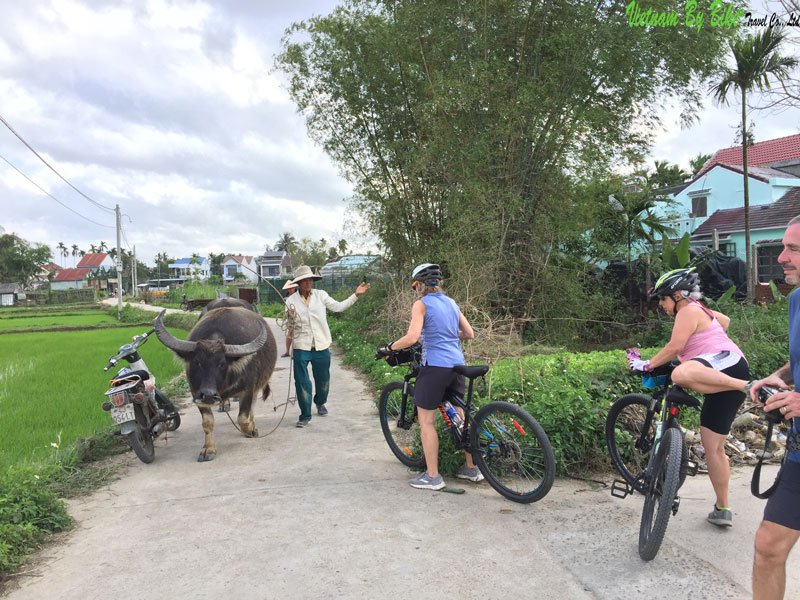
Beyond the Surface: Tangible and Intangible Wealth
Central Vietnam Bike Tours are home to an incredible concentration of UNESCO World Heritage sites, but its true value lies in the intangible heritage—the rhythm of life in the villages, the unique dialects, and the culinary traditions born from scarcity.
The Food: Resourcefulness turned simple ingredients into complex masterpieces (like Com Hen or Bun Bo Hue).
The People: A stoicism tempered by genuine warmth and a "slow-burn" hospitality.
The Landscape: A mosaic of white sand dunes, emerald lagoons, and limestone peaks.
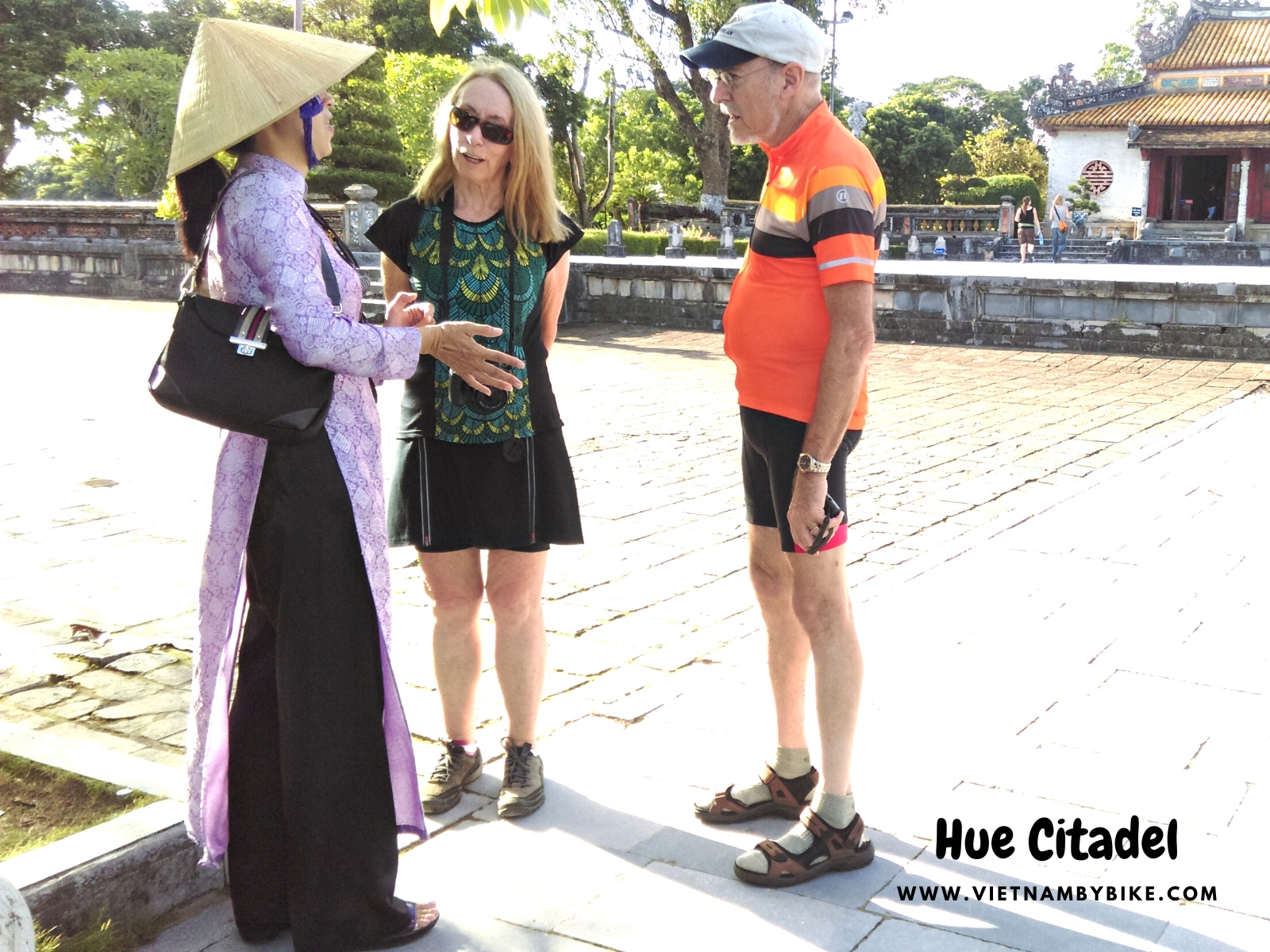
The Art of the Slow Journey: Why Cycling?
To truly understand Central Vietnam, one must reject the "fast-food" style of tourism. A bus window or a quick flight provides only a blurred snapshot. To capture the essence of this region, you need to feel the humidity, smell the salt in the air, and hear the calls of the street vendors. This is why in-depth cycling tourism is not just a product—it is a necessity for the conscious traveler.
Feature | Modern Rapid Tourism | In-Depth Cycling Tourism |
Pace | Rushed, checklist-oriented | Slow, meditative, and observant |
Interaction | Isolated behind glass | Direct engagement with locals |
Understanding | Surface-level facts | Deep cultural immersion |
Environmental Impact | High carbon footprint | Sustainable and low-impact |
Cycling through the backroads of central villages allows you to peel back the layers of history. You see the "crucial locations" our ancestors built, not as museum pieces, but as living, breathing communities. It takes time to appreciate why a village was built behind a certain hill or how a community recovers after a flood. These are the "unparalleled values" that only reveal themselves at 15 kilometers per hour.
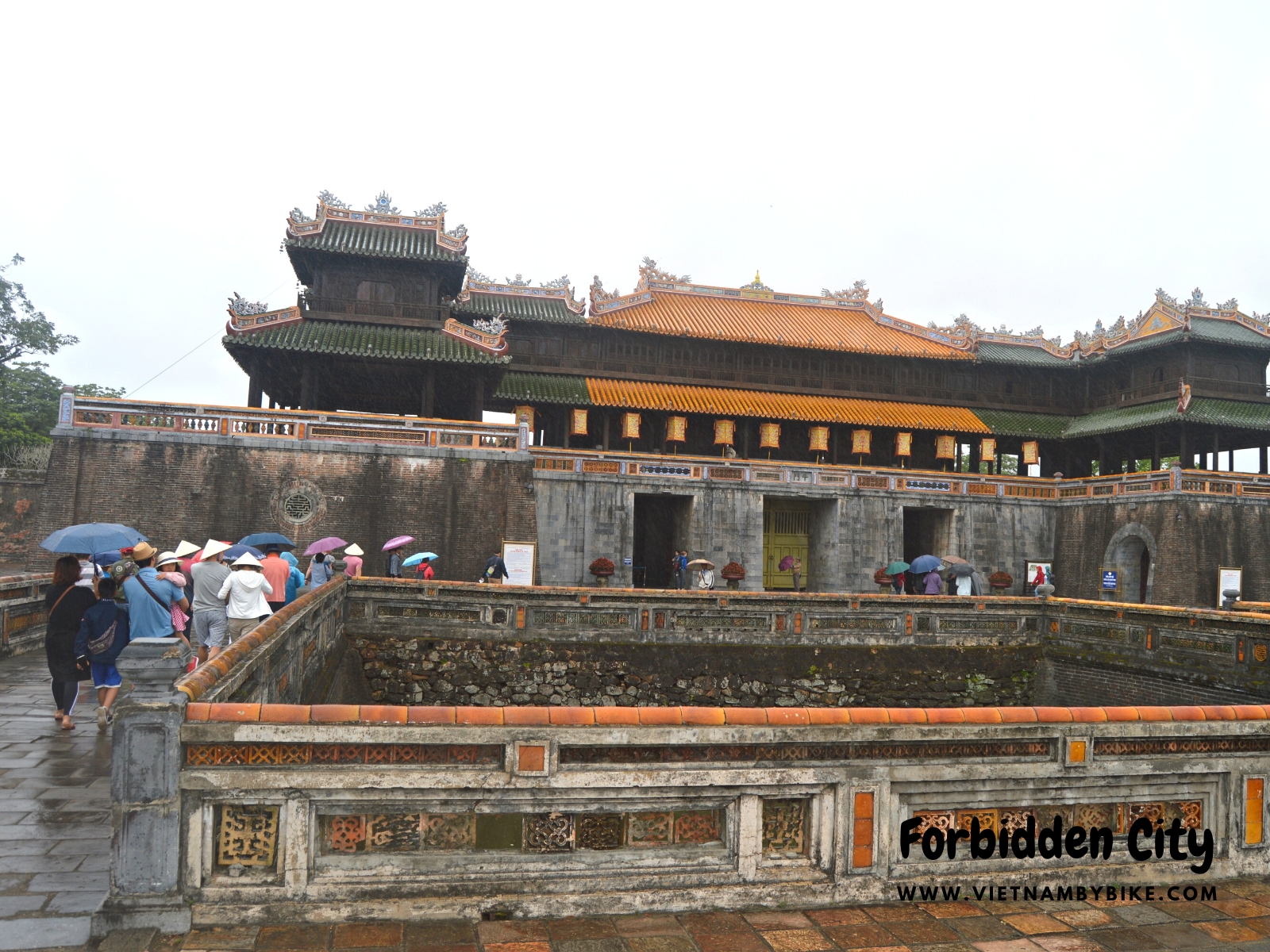
In 1802, after years of civil strife, King Gia Long ascended the throne and made a decision that would change the course of Vietnamese history. He chose Hue—a narrow strip of land nestled between the Perfume River and the Ngu Binh Mountain—as the capital of the newly unified nation. This choice wasn’t merely aesthetic; it was deeply rooted in Feng Shui and strategic defense. Gia Long sought to anchor the nation’s soul in a location that bridged the North and the South, creating a center of gravity for a people who had long been divided.
The Citadel he began building is a masterpiece of "Vauban" military architecture blended with Eastern philosophy. Its walls, three tiers deep, were designed not just to keep enemies out, but to protect the "Son of Heaven" and the spiritual mandates of the kingdom.
A Landscape of Legend and Stone
Walking through the Imperial City today feels like stepping into a living legend. Every gate, bridge, and pavilion has a story:
The Noon Gate (Ngo Mon): Where the Emperor communicated his decrees and watched his troops.
The Forbidden Purple City: Once reserved exclusively for the royal family, this secluded inner sanctum remains shrouded in the mystery of courtly life and secret traditions.
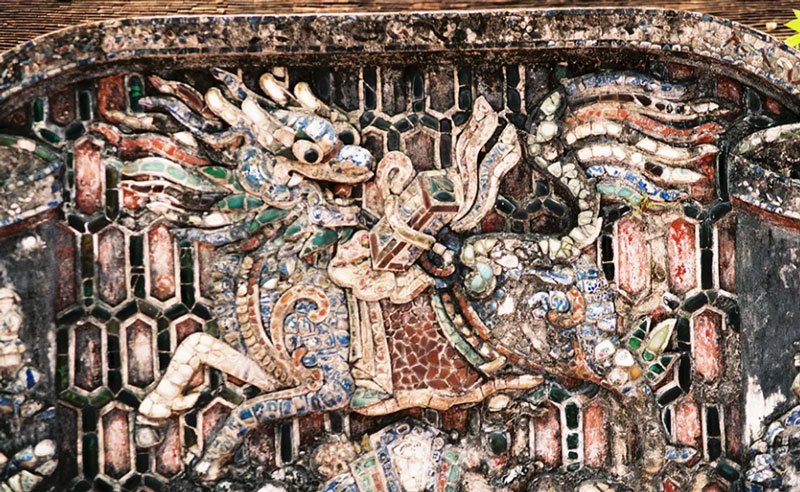
The Royal Tombs: Scattered along the Perfume River, these are not just burial sites but "eternal palaces" designed to reflect the personality of each emperor—from the poetic serenity of Tu Duc’s tomb to the extravagant, mosaic-clad walls of Khai Dinh.
"To understand Hue is to understand the Vietnamese concept of 'tranquility through hardship.' The stones here have survived wars, floods, and the passage of centuries, yet they retain an undeniable grace."
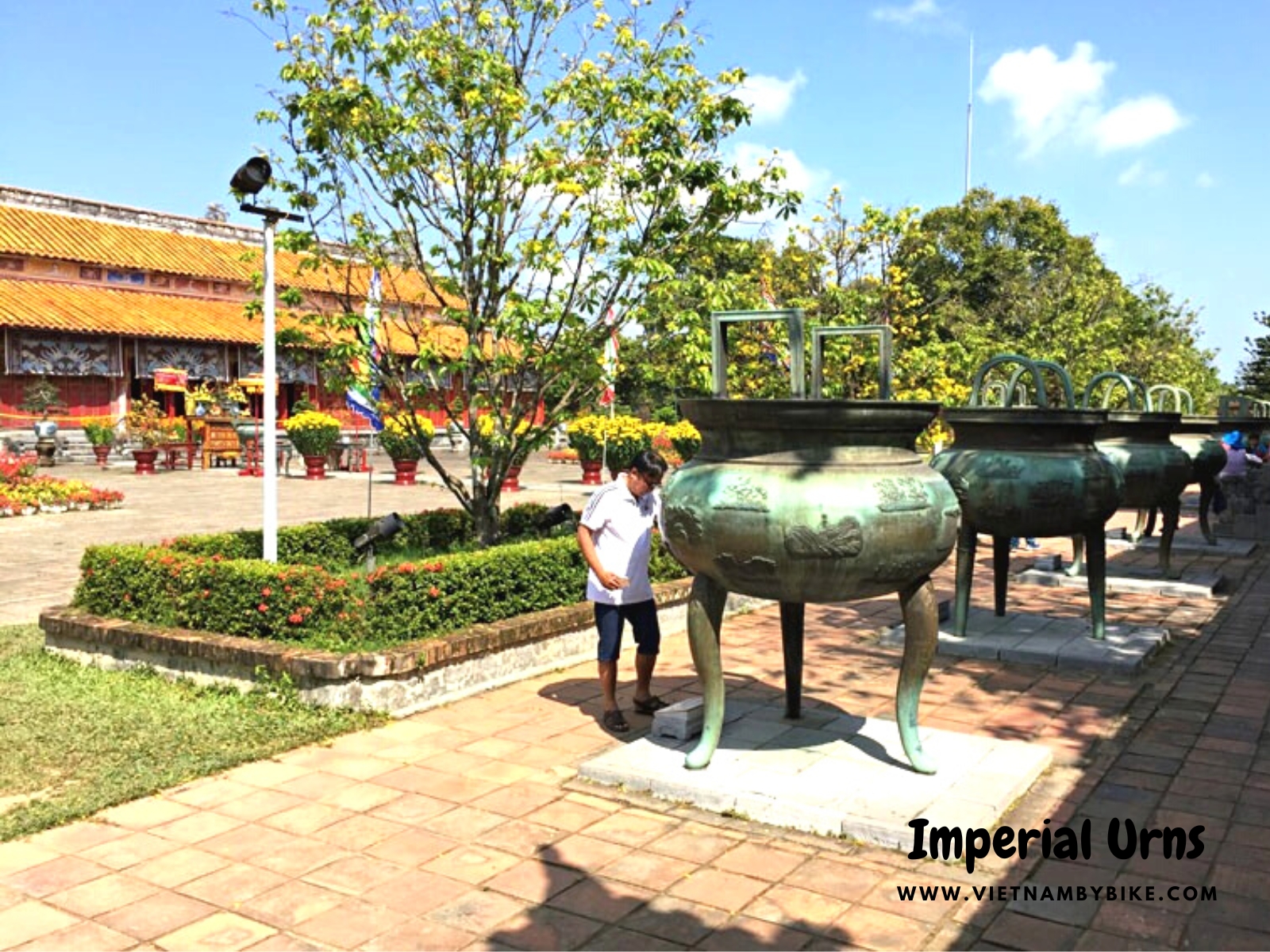
Spiritual Values and Living Heritage
Beyond the tangible bricks and mortar, Hue is the spiritual capital of Vietnam. It is the birthplace of Nha Nhac (Vietnamese Court Music), recognized by UNESCO as a Masterpiece of the Oral and Intangible Heritage of Humanity. The melodies played here were once thought to harmonize the relationship between the monarch, the people, and the heavens.
The city's spiritual value is also found in its culinary heritage. Hue’s cuisine was shaped by the demands of the royal court, where every meal had to be a work of art—balancing color, flavor, and nutrition. Today, even a simple bowl of Bun Bo Hue carries the DNA of that imperial refinement.
Why Hue Remains Essential
Hue reminds us that history isn't something that happened "back then"—it is something we walk through every day. For the modern traveler, visiting the Imperial City is an invitation to slow down. You cannot "rush" Hue; its beauty is revealed in the way the sunlight hits the Thien Mu Pagoda at dusk or the quiet dignity of an old village elder telling a story about the Nguyen Kings.
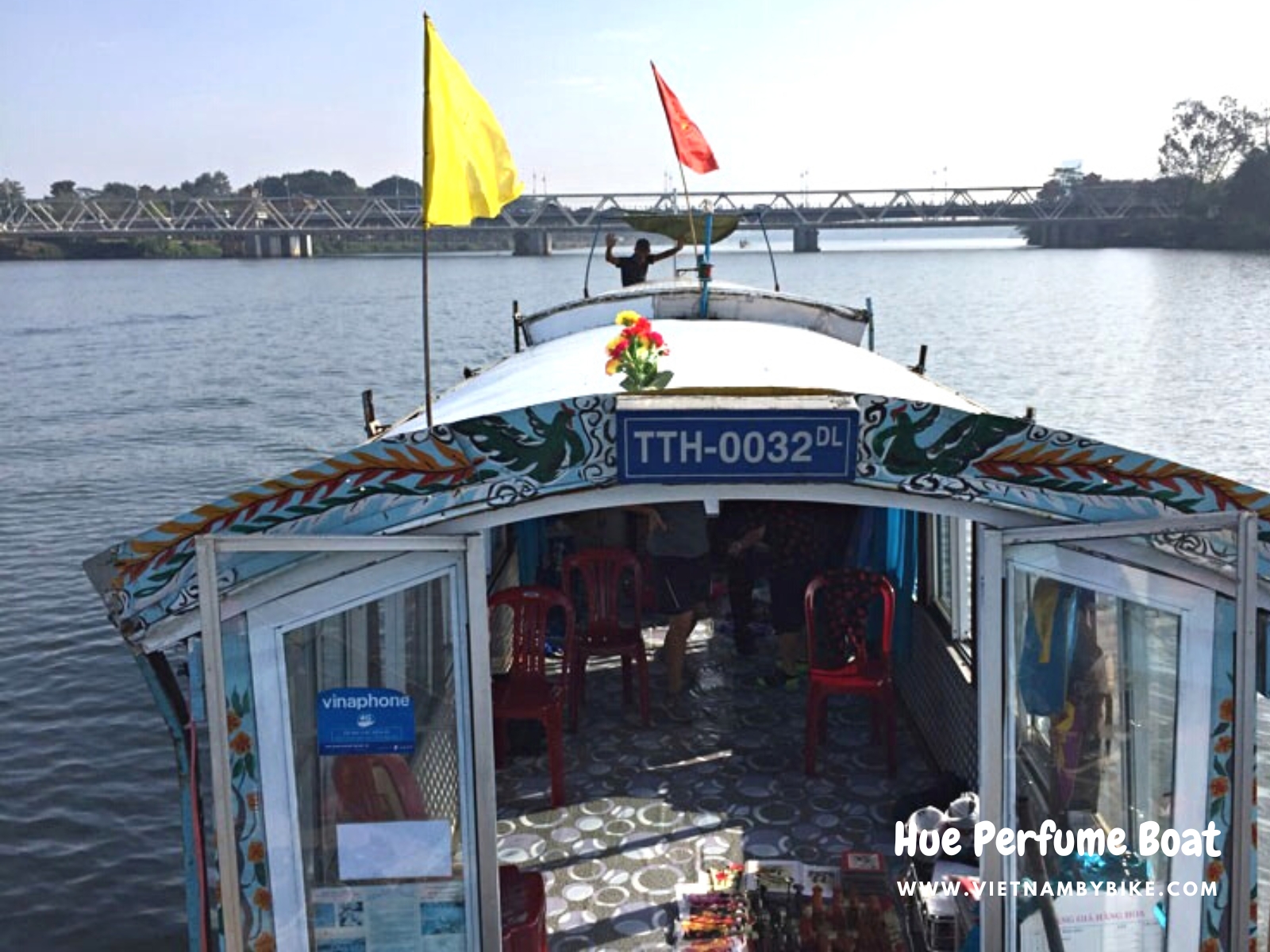
If the Imperial City is the heart of Hue, the Perfume River (Sông Hương) is its soul. To the casual observer, it is a slow-moving, silver ribbon of water. But to those who understand the layers of Vietnamese history, it is a masterclass in ancient urban planning, spiritual harmony, and the delicate balance between man and nature.
The Sacred Geometry of the Left Bank
Our ancestors did not place the Citadel on the left bank of the Perfume River by accident. They were masters of Phong Thuy (Feng Shui), the art of harmonizing human structures with the natural world. The river was seen as more than just a waterway; it was a "vital artery" of energy.
By situating the capital on the northern (left) bank, the architects utilized the river as a natural moat, providing both security and a grand aesthetic entrance. To the front, the river faces the Ngu Binh Mountain, which acts as a "Royal Screen" protecting the city from malevolent winds. The two small islets in the river—Con Hen and Con Da Vien—serve as the "Left Dragon" and "Right Tiger," guardian spirits that anchor the city’s prosperity.
A River of Memories and Hidden Meanings
A cruise on the Perfume River is often described as a "poetic experience," but what does that truly mean? It means experiencing a silence that is rare in the modern world. As you drift past the Thien Mu Pagoda, the river reflects a history that is both glorious and somber.
The Name: The river earned its name from the orchards and medicinal herbs that grow upstream; in autumn, fallen blossoms would drift down the water, carrying a subtle, sweet fragrance.
The Rhythm: The river dictates the pace of Hue life. It is gentle, yes, but it is also persistent—a mirror of the people’s character.
The Spiritual Connection: For locals, the river is a site of transition. It is where traditional rituals are held and where the "Hidden Meanings" of Hue’s past are whispered in the evening mist.
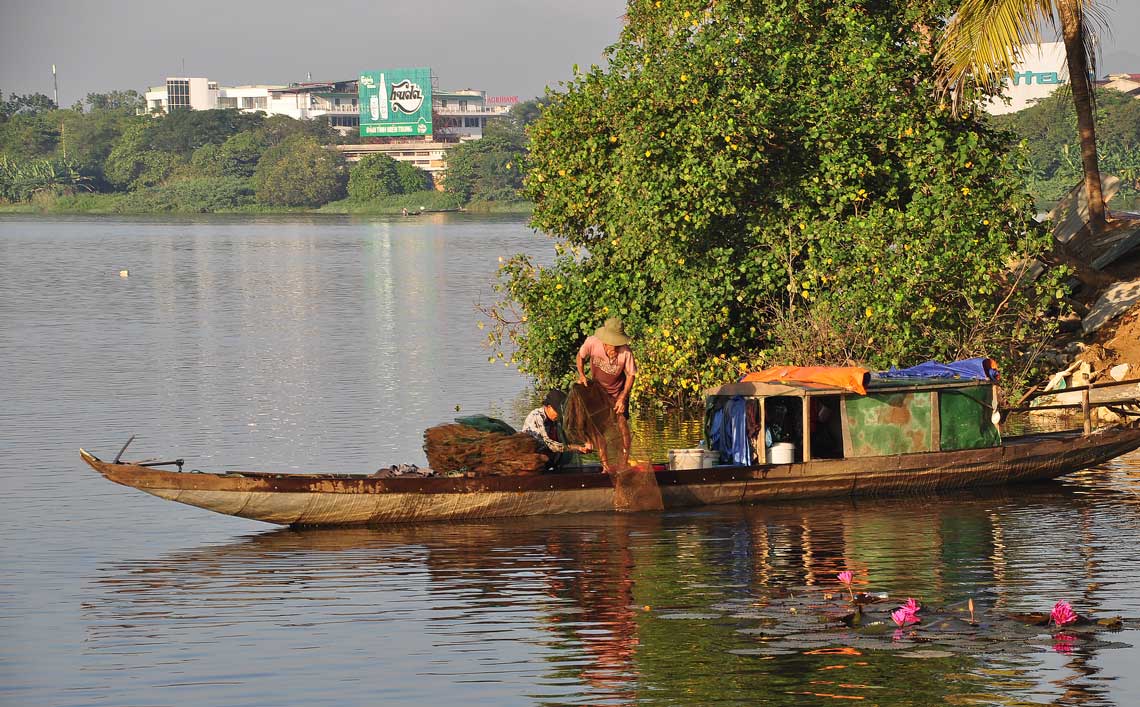
The Paradox of Give and Take
The prompt mentions that the climate "gives and receives in unexpected ways." This is the central drama of Central Vietnam. The Perfume River is a generous provider, but it is also a demanding force.
What the River "Gives" | What the River "Receives" (Takes) |
Fertility: Nutrient-rich silt that feeds the famous garden houses of Kim Long. | Space: During the monsoon, the river reclaims the land, testing the resilience of the riverside villages. |
Serenity: A climate-moderating effect that keeps the city cooler than the surrounding plains. | Patience: The people must wait for the waters to recede, a cycle that has taught them stoicism. |
Inspiration: A source for centuries of Vietnamese poetry, music, and art. | Offerings: Generations of prayers and lanterns released during spiritual festivals. |
Discovering the Banks by Bicycle
While a boat gives you the river's perspective, a bicycle gives you the riverbank's secrets. Cycling along the paths that hug the Perfume River allows you to stop at a moment's notice—perhaps to explore a hidden family temple or to watch a craftsman working on traditional lanterns. The river air is a constant companion, cooling the brow of the traveler as they navigate the dappled sunlight of the ancient trees.
In Hue, the Perfume River is not just a destination; it is a teacher. It teaches us that true power lies in gentleness and that the most enduring values are those that flow steadily through time.
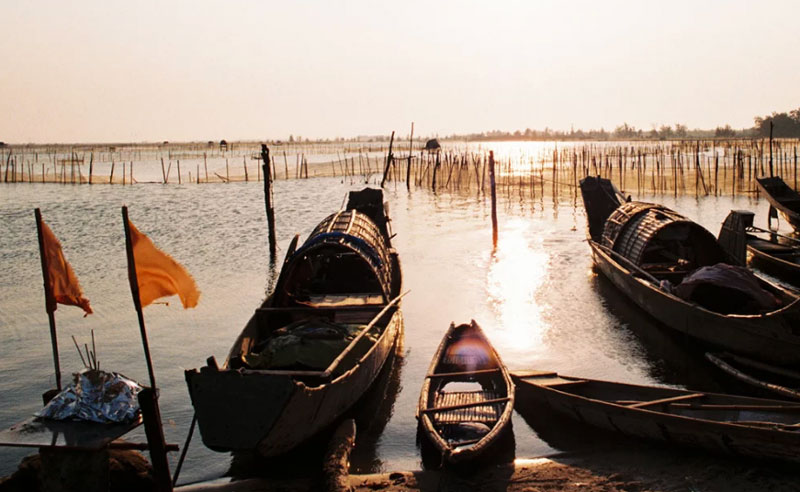
The Great Divide: The Hai Van Pass
To cross the Hai Van mountain range is to witness one of nature's most unusual "geographical handshakes." The difference between the two sides can be startling. One moment you are shrouded in the misty, poetic coolness of the north, and the next, you descend into the vibrant, sun-drenched coastal plains leading toward Da Nang and Hoi An.
Feature | North Side (Hue Leanings) | South Side (Hoi An Leanings) |
Climate | Often cooler, mistier, and more temperate. | Noticeably warmer, brighter, and tropical. |
Landscape | Steep, rugged cliffs and dense forests. | Wide coastal vistas and golden sandy beaches. |
Atmosphere | Reticent, historical, and serene. | Open, energetic, and maritime-focused. |
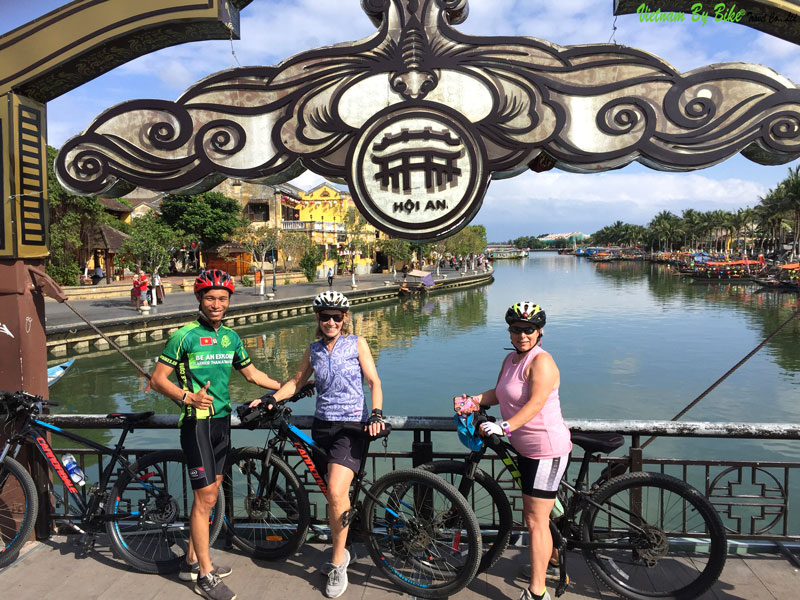
Hoi An: A Masterpiece in Amber
Once across this sentinel of stone, we arrive in Hoi An, a town that feels as though it was painted into existence rather than built. While the user notes its status as intangible heritage, it is important to highlight that Hoi An Ancient Town is a UNESCO World Heritage Site primarily for its exceptionally well-preserved trading port architecture. However, the soul of the town is indeed intangible—found in the way the silk lanterns glow at twilight and the quiet rituals of the local shopkeepers.
The architecture here is a "cultural kaleidoscope." Because Hoi An was a global trading hub between the 15th and 19th centuries, the houses are masterpieces of fusion. You will find Japanese bridges, Chinese assembly halls, and Vietnamese "tube houses" all standing in a harmonious, picturesque row. These buildings are not just tourist attractions; they are living histories that have survived floods, wars, and time itself.
"The yellow walls of Hoi An don't just reflect the sun; they absorb the stories of centuries of sailors, merchants, and artisans."
Cycling holiday through Vietnam
Because these sites are so delicate and rare, we believe the only way to "develop" tourism here is through sustainable preservation. This is why we advocate for cycling as the primary mode of exploration.
A bicycle allows you to navigate the narrow alleys of the Ancient Town without the noise and pollution of an engine. It permits you to leave the "tourist bubble" and pedal toward the mountains and the sea, discovering the rural villages where the real Hoi An lives. These are the places where traditional crafts—like pottery and carpentry—are still practiced as they were 400 years ago.
By choosing an in-depth, slow-travel approach, we aren't just visitors; we become temporary guardians of this heritage. We learn that the "picturesque" view is the result of centuries of human effort to live in harmony with a landscape that is as beautiful as it is a cycling challenging.


